Blog

Please follow and like us:

Follow by Email
RSS
Facebook
Twitter
Follow Me
Tweet
Youtube
Instagram
SOCIALICON
  • The Invisible Mourner: Saying Goodbye to an Aunt I Never Met
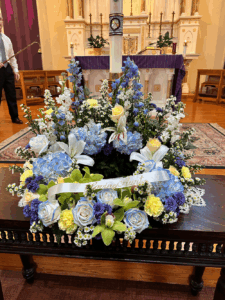
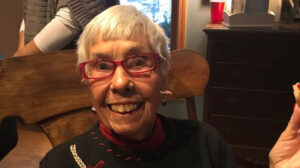
    Well…I went. I’m glad I did. I didn’t know if I’d attend Aunt *Jane’s funeral until the last minute. Even then, I sat in the church parking lot for a long time before going in. The church was five minutes from my house. I arrived early so my bio siblings wouldn’t see me driving in if they were in the lot. I’m glad I did. I watched them arrive and walk inside while I stayed far enough away not to be noticed. I felt like a bit of a stalker. But seeing them actually calmed my nerves. I knew that once they were all there, I could slip in through the back door and sit in the last pew unseen, which is what I did. I had never been in this church before, so I didn’t know the layout. I asked one of the funeral attendants outside if she thought I could walk in quietly after it started. She said yes. I didn’t know if opening the doors would be dramatic or noisy. That would have been my worst scenario, and kind of funny-not-funny, if that made all kinds of noise and they all turned around. She offered to walk me in, which I appreciated. The funeral got off to a late start, so I arrived just a few minutes before it began. There were only about 25 people in attendance, but I had expected that. She was 97 and had no children. She outlived most of her friends. I could see the backs of one of my bio brothers, *Tony, and my bio sister, *Donna, in the front row. I could see my bio cousins, the children of Jane’s sister *Harriett, in the second row. I had done enough social media stalking to recognize those great-nieces and nephews and their spouses in the other rows. I could see my cousin *Claire and her husband in the second row. I quietly entered and was startled when another funeral worker approached. He softly asked, “Are you family?” Wow. I should have expected it, but I didn’t and froze. I shook my head no. He showed me the sign-in book and said I could sit anywhere. I signed the book, noticing others had included short messages beside their names. Thinking, what the heck, I wrote, “My deepest sympathies on your loss.” Then I slipped into the pew in the last row. And it was both bittersweet and lovely to hear about Jane through Harriett’s children, who all spoke about her. I felt moments of profound sadness that I never knew her, but I also hung on every word and saw the love they all had for her. That made me happy. It was a confusing mix of emotions to sit there and see the family I most likely won’t ever really belong to, yet we share the same DNA. It’s like I’m simultaneously a family member and a ghost. Very weird. None of my cousins (Harriett’s kids) know about me. When they stood at the lectern or greeted each other with the peace, they sometimes turned around in their pews. If they noticed me, they might have been puzzled by who I was sitting back there. There were a few other people scattered throughout the church, too. But Jane was well known in the community, so they likely brushed it off. I wasn’t in eye shot of Tony and Donna. The more I sat there, the more I felt I had every right to be there. So instead of slipping out before it ended, I stayed. Maybe it was a little bratty of me. Because I knew my brother and sister would walk right past me during the processional out of the church. Donna saw me when she was about four rows from me. And she looked shocked. Then she looked away. She and Tony walked by my pew, looking straight ahead.  I’m not sure where my other bio brother was, but he lives in Florida now, so maybe he couldn’t make the trip. I hung around the church after people left for the cemetery, taking some photos of the flowers before they were brought over. I took a few photos of the inside of the church and of a stained-glass window dedicated to one of my biological family members. This church was a big part of some of their lives. The cemetery was a few miles away. I ran errands and waited until I was sure the family had left before going there. I brought my Aunt Jane pink roses and placed them with the funeral wreath on her plot. I took some photos. And then I went home. **pseudonym This is my NPE story of discovering in 2015 that my Dad was not my biological Dad. If you’d like to follow along, I encourage you to start at my first post of the series HERE. Please follow and like us:

  • Do I Have the Right to Say Goodbye?
    Yesterday, while we were preparing for a huge blizzard that was about to hit Connecticut later that day, my phone rang. It was my new cousin *Claire. I found myself tangled up in some cords I was setting up to charge my two iPads and my laptop in case we lost power, and I missed picking up the call, but I glanced over and saw she was leaving a voicemail. “I’ll call her back in a minute,” I thought to myself. I finished what I was doing and, before I called her back, I read the voicemail transcription. “Hi Jenny, it’s your cousin Claire. I hate to do this by phone, but I wanted to let you know that *Jane passed away around 11 o’clock this morning. I will try you again in a few minutes. Take care. Love you, bye.” I felt tears well up in my eyes, which completely caught me off guard. Jane was my Aunt. She and my biological father were brother and sister. She was 97 years old and had been in a nursing home for several years after a stroke robbed her of her speech and left her in need of regular care. She died without ever knowing I existed. When Claire and I finally talked on the phone, she told me Jane passed peacefully, and we both agreed she had a long and wonderful life. Claire and Jane were very close, and Claire shared many stories of Jane with me. Maybe that is why I felt I knew her when I really didn’t. I don’t know. As we talked and Claire shared more stories about Jane, she suddenly paused and said, “Listen. I want to let you know that you have every right to go to that funeral if you want to. And I’ll back you up. None of them like confrontation, so I’m sure they won’t say anything to you. But if they do, I’ll be there and take care of it.” It’s hard to explain, but I suddenly felt panicked. Not about being confronted, but about owning Jane as my Aunt by showing up. Of course, only Claire, my bio siblings, and I would know who I really was because no one else in the family knows about me. And if I failed to mention it earlier, my bio siblings don’t know Claire is talking with me. Claire’s validation of me as a family member made me emotional, too. And so grateful. My voice cracked a little when I answered, “Thank you for saying you will back me up. That means so much to me. I’ll think about it. I don’t want to make anyone feel uncomfortable.” I asked myself the big questions. What is my point in going? Would I be attending to honor this aunt, or was it more about finding some closure for myself? What if someone asks me, “How did you know Jane?” I wonder if Aunt Jane would have welcomed me if I had met her when she was in good health? Like Claire did. She could have told me so much about her brother, her parents and her grandparents from a perspective I’ll never hear. Questions I can never ask. I have to decide whether going will bring me some kind of peace or just make me feel more rejected. Standing at the periphery of a family that is mine but doesn’t claim me will be painful. But maybe I can go quietly, sit in the back, and not make this anything about me. Just honor her. I didn’t get that chance with *Joe. I have some thinking to do. Do I have a right to say goodbye? *pseudonym This is my NPE story of discovering in 2015 that my Dad was not my biological Dad. If you’d like to follow along, I encourage you to start at my first post of the series HERE.  
  • The Questions I Can Never Ask
    I recently found a photo of my bio grandmother’s sister, Sadie, on Ancestry. I’d never seen her face before. As I looked at it, I realized some doors will always be closed in this *NPE journey. There are questions I can never ask, stories I will never know, and faces of family I’ll never see. That’s probably been my hardest hurdle to overcome. My birthday is in a few weeks. All this NPE stuff always gets stirred up for me around this time of year. Growing up, I had the impression that my conception and birth were joyous little surprises after a six-year gap between my brother and me. So, it’s hard not to study the day I was born, and how I came to be, through the lens of what I know now. I don’t feel it was a joyous time for my mother whatsoever. Or **Joe. Or possibly my Dad – if he had any suspicions. I feel there were various levels of anxiety, stress, and, unfortunately, shame amongst them all. What was my mother thinking during her pregnancy and on the day I was born? Did she wonder if I would look just like Joe, forcing her to explain it away? Did she grasp the burden of carrying this secret for decades? Had my dad figured it out, and did he question if he could love me as his own? Was Joe in denial, disassociating from being my father? This isn’t to say my mother wasn’t happy I was born. Even when she felt conflicted, I knew she was glad I was here. She loved me very much. I have never doubted that. I have questions that will never be answered, and, most of the time, I’ve come to terms with that because I really have no choice. But as my birthday approaches in February, I can’t help drifting from acceptance to feeling a twinge of unfairness, and frankly sadness, of never knowing the family stories most people grow up with. I never had the luxury of knowing Joe as an adult and finding out the truth. Having my own children, especially, the questions I wished I could ask him felt even more urgent. Maybe hearing his answers would somehow assure me that he didn’t regret that I was born. “How did Mom tell you she was pregnant with me? What was your reaction?” “Did you decide together that Mom would raise me as Dad’s daughter? Or did one of you want it that way more than the other?” “When was the first time you saw me? What were you feeling when you saw me? Did you think I looked like you? Or your mother? Or your sisters?” “Did you ever want me to know you were my biological father? “Did you love my mother?” Being an NPE means learning to live with the silence of questions that will never be answered. Most days, I’m at peace with it. But celebrating the day I was born brings up feelings that are hard to explain. I wouldn’t trade my life for anything, yet it’s strange to be grateful for an affair. Grateful for something complicated and imperfect that brought me here. *NPE is an acronym describing a person who has had a “Not Parent Expected” discovery. **pseudonym This is my NPE story of discovering in 2015 that my Dad was not my biological Dad. If you’d like to follow along, I encourage you to start at my first post of the series HERE.  
  • Speaking Different Languages
    For me, sometimes it feels like I am living in multiple worlds since my NPE* discovery. How differently I share my DNA discovery truth with people is almost like I’m speaking in different languages to each of them. Without realizing it, I self-censor each time I talk about this. When I wrote my letter to my new half-sister, I didn’t go into detail about what I knew and remembered about the relationship between my mother and our mutual father, Joe**. And I could have. It is doubtful she knew that her father came over to our house many times while I was growing up. It is a memory I have well into my early teens. I doubt she knows my mother would call Joe throughout the years with life updates on my children – his grandchildren – and me. It felt like I would rubbing salt in a wound I was knowingly inflicting on her. I really don’t talk about this with my raised siblings anymore since the early days of telling them. I don’t post anything on my main social media (where I know they are) about being an NPE. I think some of them are aware of this blog, but I have no idea if they have read any of it. The large vintage 1917 photo I had printed of Joe’s family market, with an image of Joe’s father, my grandfather, in front of it, stays on my home office wall instead of the downstairs family room wall where I’d like to hang it because I’m hyper aware at the holidays that my brother and sisters will be in my home. It is not that this topic is off limits, but I can sense they feel uncomfortable. When I talk to friends, I can’t help thinking in the back of my mind that I am boring them, or they might be thinking, “Can’t she stop talking about this? It’s been 10 years for heaven’s sake.” When I meet a stranger at a genealogy conference, and the topic of DNA testing comes up, I frequently blurt out my discovery and want to share the grief of losing half my tree because I know they will totally get what I’m saying. When I speak to my daughters or husband about it, there is levity now. We can have some inside jokes between us about it and it doesn’t seem so heavy for once. I take responsibility for how I speak, or do not speak, in all these scenarios. No one’s previous reaction has necessarily dictated how I talk about it in the future. But sometimes it does. Whether it is my imagination or projection, no one in my life hears exactly the same angle of this discovery. It is another example of how this discovery continues to evolve beyond the initial “telling” part. That may be why it is hard to gauge where I am in this journey when someone asks me. I’m telling truths in so many different ways.   *NPE is an acronym describing a person who has had a “Not Parent Expected” discovery. **pseudonym This is my NPE story of discovering in 2015 that my Dad was not my biological Dad. If you’d like to follow along, I encourage you to start at my first post of the series HERE.
  • Inheriting a Stranger
    Since I began wearing makeup when I was about 15 years old, I was never the kind of girl who sat in front of the mirror for any length of time. I didn’t really even know much about putting on makeup. And since there were no YouTube tutorials back in 1980 to watch, I would just slap on some blue eyeshadow and sparkly eyeliner and call it a day. The mirror and I have had a complicated relationship over these 10 years since my discovery. When I first discovered my Dad wasn’t my father, looking in the mirror caused me so much anxiety that it would make my heart race. I was suddenly a stranger to myself. I had looked at this face for 50 years, and it was like I was seeing a completely new person staring back at me. It’s hard to describe, but I felt different. Even though I looked exactly the same, I somehow didn’t look exactly the same to myself anymore. “Who do I look like now?” was a question I asked myself each time I looked at my face. Those blue eyes that I thought I shared with my Dad weren’t his at all. They were Joe’s* – a man I had only fleeting memories of. Yet here he was on my face, and I didn’t have a choice about it. I didn’t inherit my light skin, blonde hair, and round face from Dad’s German ancestry like everyone had told me all my life. I inherited those from…I have no idea who. I felt like a fool for falling for the myth that I looked like Dad’s ancestors. I would look at photos of my siblings and me all together and think, “How did I never see it? Am I just blind?” I felt bamboozled about the whole thing. My face was a living identity crisis for me. These days, I can look in the mirror without getting emotional about it, thankfully. I’ve certainly come a long way in coming to terms with things. I don’t dread the mirror anymore. But looking in the mirror will never be the same as before I found out. I think about being an NPE** every day when I sit down at my makeup table and start putting on my makeup. It is impossible not to. My face reminds me every single day. My daughters have been saying from the beginning of this that I look just like Joe. I didn’t agree with them early on, but as I studied each feature of my face in depth, I finally saw it. That same round face. Those same eyes. That same arch in our eyebrows, even. I am finally at peace with the physical similarities between Joe and me. That is a big step in the NPE healing journey. *pseudonym *NPE is an acronym describing a person who has had a “Not Parent Expected” discovery. This is my NPE story of discovering in 2015 that my Dad was not my biological Dad. If you’d like to follow along, I encourage you to start at my first post of the series HERE.
  • Seeing the other side of things
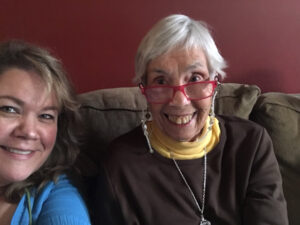
    I saw my new biological sister, Donna*, at the Post Office a few months ago. I saw her again a few weeks ago at a program held in the same building where I work. The reality is, she and I live in the same small community. And we will continue to see each other, I’m sure. And because I am a glutton for punishment and an eternal optimist, both times I saw her out in the wild,  I tried to make eye contact with her to see if there was even the slightest invitation to engage. But there never is. She pretends she doesn’t see me. The morning I woke up three years ago and decided it was time to send a letter to Donna, my new biological half-sister, I also decided that I was tired of hiding. No matter how she and my bio brothers reacted, I felt I just had to get it out there in the universe and let it be whatever it was going to be so that I could start to come to some peace with it all. Neither she nor my half-brothers have ever responded to my letter. Since then, I’ve learned a few things about Donna’s reaction to my letter and about Donna herself. It got me thinking a lot about how I would feel if I were in her place and how we share some similar character traits. My new 2nd cousin, Claire*, stays in touch with Donna and my new biological brothers. Claire has been so welcoming and loving to me, sharing family stories I would never have heard otherwise. At age 88 and not in the greatest of health, I don’t know how much more time I will have with her. It was Claire who Donna reached out to in disbelief and shock when she received my letter. A year after my letter to Donna, Claire and I met in person for the first time. You can read more about how I first connected with Claire in my blog post HERE. “Well, let’s talk about the elephant in the room,” Claire said as she welcomed me into her living room. “Donna was absolutely floored when she got your letter. And, she does not believe any of it is true.” For the next hour, she and I talked. I expected she would be Team Donna all the way, but that turned out not to be true. Claire tried hard to be neutral, but as she heard my story more and more, she closed her eyes and put her hands over her heart. “I can’t even imagine what finding out something like this does to you,” she said, “And I know that Joe* and your mother made the best decision they felt they could at the time.” I was ready to defend my mother because I assumed she would be defending Joe and his family. But I later discovered that as much as Claire loved Joe, she didn’t seem entirely surprised about the whole thing. Since our talk in her living room, Claire and I have kept in touch by email and phone and gone to lunch several times. She sends me Christmas cards. We check in. She tells me family stories. And most importantly, she is honest with me. The family dynamics and personalities in my new bio family are a little complicated, she says. I took away from our conversation that Donna may be a bit of a control freak and doesn’t like that I knew a secret that she didn’t.  I get that, actually.  I’m a big control freak myself, and I guess it would bother me if some stranger showed up and told me something about my parents that I didn’t know. In a nutshell, Claire says that Donna feels I have been misinformed and that there is no way Joe could be my biological father. Donna told Claire that she thinks my Mom’s mind must have been riddled with medication, and that caused her to tell me that. And maybe she just had a crush on Joe. I explained to Claire that once the DNA proved my connection to Joe, I had to literally pull it out of Mom, and her first words to me when I told her what I had discovered were, “I wasn’t ever going to tell you.” Donna was apparently mortified at the thought that I was going to tell some of the same people she and I both knew in our small town. She was slightly panicked, in fact. Her comment to Claire about me was, “If she contacts you, don’t tell her anything.” In some weird way, I can relate to that. My immediate reaction when I found out was panic, and not to tell anyone. Luckily, Claire, being in her late 80s and not really giving two figs, has a mind of her own. She has told me plenty. She knew Joe very well and praised him to the moon while acknowledging his flaws. Her description of him was “flirtatious.” But Claire adored him. And she patted my hand and said, “He really was a good and kind man.” I can’t force my new bio-sibs to want to have a relationship with me. I have to remember that this disrupted their lives, too. On one hand, I feel guilty for bringing this all to light and causing this turmoil inside them.  On the other hand, this is my story. I don’t need permission to talk about it. Maybe someday they will understand that. *pseudonym This is my NPE story of discovering in 2015 that my Dad was not my biological Dad. If you’d like to follow along, I encourage you to start at my first post of the series HERE.  
  • Defending and Explaining in the Same Breath
      The letter I wrote to my new bio sister was brief, simple and sincere. I knew I was the innocent outcome of a decision made by my mother and her (our) father. But every single NPE* letter I’ve read like this has the between-the-lines message that we are low-key apologizing for existing. It’s so subtle, it masks itself as just being considerate. But it’s there. I made it clear that I didn’t want anything from them and apologized if my letter might be shocking or cause them pain.  I felt I had to justify and explain why I needed to reveal the truth. When I step back and think about it, NPEs are in an impossible situation: either frame our existence with subtle apologies or else we come across as pushy and have an ulterior motive.  None of my other siblings had to apologize for being born. But for NPEs, that feeling can always be lingering, even though some of us will swear it’s not. We are the intruders in many scenarios. These families are going about their lives, and we come in and complicate it. For some NPEs, there are positive outcomes. But for many of us, there are not. Raising my hand here. We are the outliers. It is straight-up exhausting to have to defend and explain our existence all in the same breath. Why do we have to justify that we deserve to know who we came from? I felt, and still feel, I have to be on the ready to defend my mother’s moral character. I have to protect my Dad who raised me. Many NPEs are carrying the burden of other people’s decisions. It’s complicated to be an NPE because, for many of us, we are not only dealing with the trauma of this discovery, but we are also forced to justify and explain why we need to share it in order to heal. *NPE is an acronym for “Not Parent Expected.” It is also used to describe a “Non-paternal event.” This is my NPE story of discovering in 2015 that my Dad was not my biological Dad. If you’d like to follow along, I encourage you to start at my first post of the series HERE.  
  • Outing Myself Unexpectedly
      People ask me what changed my mind about reaching out to my half siblings to share that I discovered their father was also my father. The answer is that I basically backed myself into a corner and didn’t feel I had any other option. I’ve been chasing my biological identity since I made my discovery in 2015, and one of the ways I did that was to build out the new Callaghan** family tree. As any good genealogist knows, you don’t just build up, you build out. At this particular time in 2022, I focused on my new grandmother, Katherine’s line. She was one of ten children. I was meticulously building out each of her siblings with records and newspaper articles. I would also look up current living descendants and record any public contact information I found. A few times, their descendants would match with me on Ancestry or 23andMe and contact me first, and we would trade information.  Sometimes, I would write postal letters to a descendant explaining the family line I was researching, sharing information I had, and asking if they were willing to share any information with me. That’s a pretty normal thing for genealogists to do.  There wasn’t any need to get deep with them and tell them I was an NPE. This was just genealogy gathering. Sometimes I would hear back, and sometimes I wouldn’t. That was fine. Genealogy is about not leaving any potential stone unturned. You go as far as you can with each person you are researching. One day, I was researching Katherine’s oldest brother, Michael. I had gathered some information on him, but not as much as I would have liked. As I documented his descendants, I saw that one of his granddaughters was still alive but in her mid-80s. Her name was Claire**.  She lived a few towns over from me. I put together a packet with the information I had on Michael and a brief letter about sharing family stories or photos of him if she felt comfortable. I included my phone number. Forty-eight hours later, my cell phone rang. It was Claire. She was overjoyed that I was researching the family, and she hoped I could fill in the gaps for Michael’s wife, who was an orphan. We chatted happily for about 15 minutes, and she shared family stories and said she would send some things in the mail to me. She must have thanked me ten times for taking on this research. I was so happy to talk with her and make a connection. Finally, I said, “I’m sure it’s strange hearing from a total stranger. I really appreciate you sharing all of this with me.” She replied, “You’re not a stranger, Jenny! Remember I met you on the night of the documentary film screening about Joe’s market?” I nearly dropped the phone I was so surprised. I had absolutely no memory of meeting her. She was referring to a documentary I worked on with the local historical society and Joe’s family about his market three years ago.  That event was very stressful because I had figured out that Joe was my bio father, yet I had to go to this event where my half-siblings would be and co-host the event with them. They, of course, didn’t know I was their sister. So, that night was a complete blur to me. It’s a long story about that experience that I’ll post about soon. Back on the phone,  Claire added, “Yes, I called Tony** (one of my new half-brothers) yesterday to tell him you were researching the family tree and that you had contacted me.” “Oh my God,” I said to myself. Now what? Tony is probably asking himself why a person he barely knows is looking into their personal family tree and contacting other family members about it. I started panicking and needed to get off the phone with Claire as quickly as possible before she asked me the same question. What if he calls me to find out why I was doing this? What am I going to say? I ended the call as quickly as I could so I could think. I promised to share anything I found on her grandmother. Why had I not thought this through? Why didn’t I realize the possibility that Claire would be in touch with my half-siblings? It was common sense. But it didn’t even cross my mind. Or did it on some level? I honestly don’t know. When I say trauma messes with you, this is a perfect example. You block out things. You choose not to see things. You make rash decisions. I had opened Pandora’s box, and I was freaking out about it. Should I just tell them? They must think this is so weird.  They are surely going to ask Claire to ask me why I’m so interested in this tree. I can’t tell her the truth before I tell them.  Maybe my other half-brother went immediately to his Ancestry results and saw our connection once and for all. Are they going to tell Claire not to talk with me again? I had no idea what they knew or if they suspected anything about who I was. I didn’t know what to do and I was feeling a sense of panic about it. I had made a big mistake by contacting Claire. The burden of this secret suddenly felt enormously heavy. I had originally intended to never tell them. But now it felt like I was being crushed by this secret. I was tired down to my bones. Call it fate, call it my own stupid mistake, but I’d put something in motion, and I felt I had no choice but to follow it through and reveal myself to them.  This was my story. If I wanted to have some control over how it would be revealed, I would need to get ahead of it.  I sat down a week later and wrote a letter to my half-sister. She and I worked on the documentary together and I felt I had a good connection with her.  I didn’t know when I would send it. But I felt so much better after writing it. It sat on my desk at home for three months. Then one morning I woke up and said to myself, “It’s time.” *NPE is an acronym for “Not Parent Expected.” It is also used to describe a “Non-paternal event.” **pseudonym This is my NPE story of discovering in 2015 that my Dad was not my biological Dad. If you’d like to follow along, I encourage you to start at my first post of the series HERE.  
  • What Happens Now?
      What happens when the proverbial dust has settled on an NPE* discovery? The quick answer is that you live with it. We can all agree what was done to us was unfair. But unfortunately, it’s done. I don’t like that answer, but it is true. You don’t have to “accept” it, you can be angry about it, but you have to find a way to live with it for your own mental health. The longer answer is that you spend your energy navigating the unexpected triggers that can pull you back in. You never know what that trigger will be to set things off. It’s an example of why, for many of us,  you never get complete relief from it all.  It’s been nine years for me, but it still happens. The other night, I had a dream about being in my bio father’s market. I was a child, and I was running up and down the aisles. I woke up with a feeling of sadness and anxiety. I don’t really understand why. I shook it off, but it stayed with me for the rest of my day, just under the surface. In my case, I’m sure these triggers are still happening because I don’t have closure with my new half-siblings. Sometimes I feel emotionally off balance, and it’s hard to pinpoint why. But a lot of it seems to lead back to being an NPE. If you’ve read my previous chapters, you’ll remember that my new bio half-siblings have never responded to my letter from two years ago telling them I discovered I am their sister. The silence is deafening, but their message is loud and clear. I keep telling myself to just move the heck on.  But it’s hard to let go completely. But back to triggers. I set myself up for one a month ago and have no one to blame but myself. I made contact recently with a much older second cousin on my new paternal side. She’s been so great. She welcomed me warmly to the family and shared stories of my biological father, who was her godfather and whom she knew very well. I’ll write about her soon.  She told me that my bio sister shared my letter with her, which shocked me, but at least confirmed to me that she received it.  My bio-sister is choosing to believe none of it is true.  My bio brothers apparently don’t want to rock the boat with her, so they are just not looking at the situation at all. What can I do? There is nothing more I can do if they don’t believe me. I decided not to put this new cousin in the middle of things and shifted focus to my bio father, Joe Callaghan,** and what other stories she could share with me about him. One day, while we were emailing back and forth, I let her know that I had sent away for Joe’s military service records, and they were chock full of information about his daily life in the Marines during WW II. She was excited for me and wanted to hear all about it. Apparently, being a glutton for punishment and rejection, I said to her, “Do you think I should make a copy for them (my bio half sibs) and just mail it off to them? There’s stuff in here I’m sure they have never seen.” She responded with, “I don’t think that’s a good idea, but it’s up to you, of course. They might feel you are getting too much into Joe’s personal life and feel offended you know something about him that they don’t.” That last sentence triggered something in me, and I felt a rush of anger when I heard it. I wasn’t angry with the cousin. I was angry about how little I seem to matter in this situation. So, not only do I have to deal with this life-altering news , but I also have to deal with this new identity that apparantly no one really wants me to have. This discovery really messes up your head. The grief and pain of everything that goes along with this horrible thing can be crippling. But now my new siblings get to dictate what I can know about my own biological father? On top of that, they also just get to ignore everything I wrote in that letter and low-key suggest I’m lying about it? The fact that I share 25% of my DNA with my half-brother on Ancestry for all the world to see, isn’t enough evidence? My mother confirming the truth isn’t enough evidence? My FACE isn’t enough evidence? I can understand that this rocked their world. I understand more than anyone that dealing with a shock like this is different for everyone and how they process it is also different for everyone. But they KNOW me. They knew my mother. They knew my whole family. I’m not someone who just came out of the woodwork and claimed to be their sister. But apparently, in their narrative, I am. The cousin went on to assure me, it’s not me, it’s her. But the reality is, my bio siblings have the power. They are the gatekeepers to him. All three of them. They have the keys to the kingdom, and they know I can’t learn more about our father unless they open that door. It’s so frustrating sometimes. I wouldn’t know almost anything about Joe if I wasn’t a genealogist. But research records and newspaper articles don’t replace personal stories of the man he was. Thankfully, I have a scant few memories. Here’s the takeaway from this trigger. I’m not unworthy to learn personal things about the person who is 50% of the reason I exist.  They don’t want to let me in, and that’s certainly their choice. I know it’s hard when a parent falls off the pedestal you put them on. They have the luxery of putting their heads in the sand, but I have no choice but to deal with it every single day when I look in the mirror. But I don’t have to apologize I exist, and I don’t have to pretend that their father isn’t the one who created me just because it’s hard for them to face. I just have to keep going forward. *NPE is an acronym for “Not Parent Expected.” It is also used to describe a “Non-paternal event.” **pseudonym This is my NPE story of discovering in 2015 that my Dad was not my biological Dad. If you’d like to follow along, I encourage you to start at my first post of the series HERE.
  • Cousin Kate
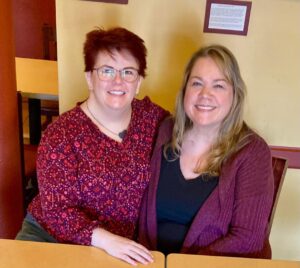
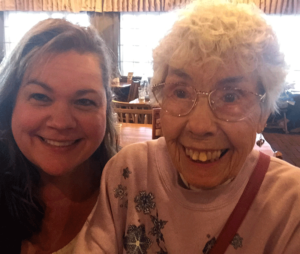
    This is my NPE story of discovering in 2015 that my Dad was not my biological Dad. If you’d like to follow along, I encourage you to start at my first post of the series HERE. “Hello Kate, It looks like we are an estimated 2nd—3rd cousin match on our paternal lines. Would you be interested in sharing information?” I wrote in a message to a new match on 23andMe in January 2023. The reality was that I was still checking my DNA regularly, hoping to connect with someone on my biological father’s side.  I was still chasing that connection to who I was, trying to fill in half of my backstory. My connection with Kate would turn out to be healing for both of us and something we had both been seeking without realizing it. Kate answered me the same day with the big, joyful exuberance I would come to know and love. “Hi Jenny, it’s great to hear from you!!” she wrote. “I’m psyched to see how we are connected!” Seeing Kate’s last name, I had a hunch where we might be related, but I couldn’t quite put it all together. Then Kate mentioned her grandfather’s name, and I knew. Her great-grandmother, Jane, and my grandmother, Kathryn, were sisters. So, this made Kate and I second cousins once removed. I was hoping Kate would be able to share more details about that family branch, but as it turns out, she was on a journey of her own. She was grieving deeply for her mother, who had just recently died, and Kate was reaching out to find family to fill in the holes on both sides of her family tree. I learned that her late father and his brother had a falling out many decades earlier, and her branch of the family hasn’t had much contact with the extended family since then. There weren’t any family photos or items handed down through her father because of it. We realized that I probably knew more about that family line than she did. I was thrilled to fill her in on what I knew, and she was so happy to connect the dots on her father’s line. We quickly became good friends, and her enthusiasm was infectious. I shared my *NPE story with Kate as we got to know each other. If it’s possible to feel a big bear hug virtually, Kate gave me one. She was incredible and welcomed me to the family. She was eager to know me, which honestly made me cry at times. I’d open my 23andMe and find a happy message, with Kate’s iconic sense of humor:  “I’d really love to hear more about you and your family! I’m on this like a dog on a porkchop!” What we discovered about each other was ironic and fascinating. Not only did Kate and I grow up in the same town, but we actually lived one short street away from each other in the same small neighborhood our whole childhood. I am six years older than her, so although we were there at different times, we went to the same elementary and high school and knew many of the same people. We were both stunned at how many times our paths ran parallel. I also learned that Kate’s first cousin was the woman who had contacted me so many years earlier on Ancestry because I had matched her father as a second cousin. I mention this woman in a previous post, HERE.  Things had come full circle. Kate and I continue to email, text, and share stories about our lives. She and her son live out of state, and she hadn’t been back home to our town in many years. But in the spring of 2024, she was coming to the area, and we planned a lunch to get together. It was as if we had always known each other. I didn’t realize how much I needed this connection with Kate. I was so focused on wanting to see photos and hear stories but the reality is I just wanted someone to acknowledge me as a member of the family. She was the first person in the family who validated me. Being validated is truly the bottom line of what NPEs are seeking. I finally made a connection with someone who was excited that I existed. **NPE is an acronym for “Not Parent Expected.” It is also used to describe a “Non-paternal event.” This is my NPE story of discovering in 2015 that my Dad was not my biological Dad. If you’d like to follow along, I encourage you to start at my first post of the series HERE.
  • A New Medical History
      I had a doctor’s appointment yesterday with a new eye doctor. I was nervous. He is a specialist. Nine years ago, at age 50, when I discovered my Dad who raised me was not my biological father, one of the realities that struck me was that half the health history I had been sharing with my doctors up to that point was a complete lie. As my regular check-ups came rolling around, I had to face the stress and anxiety of writing things like ” I don’t know” on forms or crossing out what was already there in my Dad’s history because it didn’t apply to me anymore. Any history of breast cancer? I don’t know. Any history of heart issues? I don’t know. Any history of mental illness or depression? I don’t know. This was a big deal, and it scared me not knowing if there was something in my DNA that me or my girls should be monitoring. How do you live a life of prevention if you don’t know what to prevent? Like any good genealogist, I consumed myself in research on *Joe’s side. I gathered every death record and searched for every obituary. I kept a spreadsheet on ages and causes of death. It was quite sobering when I compared my Dad’s side to Joe’s side. This was my side now, I had to keep reminding myself. Right off the bat, I realized Joe’s family didn’t live as long as Dad’s. My Dad lived to be 86, and his parents lived to be 96 and 97. Joe died at 77, and his parents died at 76 and 82. As far as illnesses, my Dad had pancreatic cancer, which was horrible, to say the least.  But beyond that, there was nothing extraordinary for anyone else, and everyone lived well into their mid to late 80’s and beyond. On the other hand, Joe’s side had shortened life spans across the board due to congestive heart failure, heart attacks, strokes, hypothyroidism, stomach cancer, diabetes, and Alzheimer’s. But, the one condition that scared me the most was the macular degeneration I learned Joe developed in the last decade of his life. Macular Degeneration left Joe almost entirely blind and was paired with a host of other conditions like diabetes that made his health very poor in his last years. When I discovered this information, I immediately remembered my 23andMe health reports. According to 23andMe, of the two most common variants they test that are associated with an increased risk of developing macular degeneration, I had both of them, unfortunately. And now I knew for sure that I had a close family history of it.  That’s why I visited this highly recommended eye specialist yesterday to share my new medical history and for him to screen me for any early onset. I recently saw a video of Joe about one year before he died, and it was shocking to me how frail and shaky he looked at 76 years old. That doesn’t seem very old to me—maybe because I’m quickly coming up on 60 myself. But in my mind, I remember Joe as larger-than-life, vibrant, tall, and strong. His health obviously robbed him of all that when this video was shot. It made me sad. Of course, having conditions like all of the ones on Joe’s side is not uncommon to anyone’s family tree and doesn’t mean I will develop any of them. I realize that. These days, we also have preventative medicine and education on lifestyle modifications that didn’t exist even 30 years ago. But it doesn’t change the fact that I wasn’t given a chance to start mindfully preventing any of these things until I was 50. And what’s more, because my new half siblings don’t have any interest in communicating with me, if I weren’t a genealogist, I would have no idea about the conditions I did discover. Thank goodness I’m a genealogist. Otherwise, I would be walking around not knowing what could kill me. If nothing else, an **NPE, an adoptee, or a donor-conceived person has the fundamental human right to know their biological medical history. We all deserve at least that, don’t we? If you don’t want anything to do with us, fine, but can you at least tell us if we are passing on something to our children that could affect their whole lives? Isn’t that the decent thing to do? Back with my new ophthalmologist, I was anxious and fidgety for the entire exam. “Your optic nerves are pristine, Jenny,” he said while he peered deep inside my eyeballs with his light. “There are no signs of pre-macular degeneration at all. These are the healthiest eyes I’ve seen all day, in fact,” he said, patting me on the hand. I shared my DNA discovery with him earlier, and he was compassionate and kind. I could see on his face that he truly felt for me. I think that is why he took extra time to go over lifestyle suggestions with me that will give me the best chance to keep my eyes as healthy as possible. He couldn’t guarantee anything, of course, but he gave me hope that I had the knowledge to do what I could. Knowledge is absolutely everything. **pseudonym **NPE is an acronym for “Not Parent Expected.” It is also used to describe a “Non-paternal event.” This is my NPE story of discovering in 2015 that my Dad was not my biological Dad. If you’d like to follow along, I encourage you to start at my first post of the series HERE.
  • Saying it out loud
      “I fully expect you to say no,” my fellow *NPE friend Bill Griffeth wrote to me in a Twitter message in the fall of 2018. What he expected me to say no to was being interviewed about my NPE story. He knew what an introvert I was. But he knew from his own experience that talking about it helps, and he knew I was struggling greatly.  Bill was the catalyst for me to begin sharing my story publicly. The BBC In 2018, Journalist Lucy Ashe from the BBC was preparing an online article on the fallout of DNA testing for people who were discovering unexpected “surprises.” She was going to be interviewing Bill Griffeth at his New Jersey home. She asked him if he knew any other NPEs who might want to share their story. Bill suggested me. My knee-jerk reaction to being interviewed was, “No way.” It was entirely out of character to put myself out there like that. But after talking to my husband about it, I decided to do it.  All of a sudden I wanted to shine a light on this experience.  I knew so many others were out there going through it.  Lucy interviewed me at my daughter’s apartment in New York. I wasn’t sure I could articulate to Lucy what this experience had done to me, but I wanted to try.  She was an incredible interviewer. When I got choked up a few times during the interview, she quietly gave me time to pull it together again and continue. I understood, of course, that there was a chance that people I knew outside of my family would read it, but I was still surprised when a childhood friend and a distant relative saw it.  They contacted me immediately, expressing shock and sympathy. It felt weird that other people knew. But it also was a relief that I wasn’t hiding it anymore. If you are interested, here is the interview. Read the BBC Interview HERE Extreme Genes Podcast Scott Fisher, the host of Extreme Genes, was at the Federation of Genealogical Society’s (FGS) Conference in Indiana when I met him in 2018. I attended Scott’s workshop about interviewing your relatives about their family stories. Later that day, as I talked to a mutual friend in the hallway, Scott came up to say hello. As our friend introduced us she said, “Oh, Scott, you need to have Jenny on your show. She has such a story to tell.”  I wasn’t completely “out” yet and told him I wasn’t sure if I should do it. He was fascinated to know the details and promised to take good care of me. He did. Scott is a seasoned professional, which I liked because I work in media production myself. His years in radio trained him to get to the heart of the story.  That was important to me because I’m not a great public speaker. I tend to babble. It took me until early 2019 when I felt ready to be on the podcast. I’m really gIad I did it. I call this podcast my “light-bulb” moment. I couldn’t believe how many strangers reached out to me after this episode dropped. I started hearing story after story from other heartbroken NPEs who desperately needed to talk to someone who understood what they were going through. Our stories varied, of course, but our journeys and feelings were so much the same. It was a humbling moment for me to know that hearing my story was validating and healing for people I didn’t even know. If you are interested, here is the episode. Listen to Extreme Genes podcast episode HERE. Amy Johnson Crow Podcast I didn’t plan to do any other podcasts or interviews, but later that year, in 2019, my friend Amy Johnson Crow posted a question about DNA in her Facebook Group. Honestly, I can’t remember exactly what the question was, but it triggered me to reply that I wish more people understood the “other side” of DNA testing and how traumatic it can be when you find out something you weren’t expecting. Amy private messaged me that same day and asked, “Would you consider coming on my podcast and telling your story? No one is talking about stuff like this.” My experience with Amy was very different than Scott’s. Amy is a genealogist, so she approached the topic entirely differently. Without me realizing it, she encouraged me to tell my story as if I was documenting it for myself and my family. Yes, I tended to babble on during it, but my great-grandchildren should know that trait about me, right? Amy interjected when she wanted me to clarify something, but otherwise, she let me tell my story and my feelings fully. It was incredibly satisfying and cathartic afterward to have been able to say everything I wanted to say. Like Scott’s, Amy’s episode brought so many NPEs out of the dark and into the light for me. So many contacted me. I listened, validated them, commiserated with them, and passed along helpful resources and online support groups they could connect with if they chose to. People just wanted someone to acknowledge the pain. I knew that feeling so well. If you are interested, here is the episode. Listen to Amy Johnson Crowe’s podcast episode HERE. GenFriends YouTube show Most recently, in 2023, my friend Cheri Hudson Passey reached out to me to be on her YouTube show, GenFriends, to share my NPE story. I was a regular viewer of her program and loved it, so I accepted immediately. I like the vibe of this show because it is not just one person interviewing you; it is a panel, so there is a lot of conversation. And they are all genealogists. And several were already friends of mine.  I knew that this experience would be like sitting down and chatting like old friends tend to do. It surprised me how emotional I felt telling my story, yet again, but I realized afterward when I watched it back that being genealogists, this hit them on a deep level. I could see it on their faces. They know what it is like to fall in love with your ancestors. They understood about identity and how it is linked to family experiences. They fully understood the loss I was feeling. Watch GenFriends on YouTube HERE. I wouldn’t have believed you if you had told me at the beginning of this journey that I would be sharing my story on so many platforms and in so many different ways. I’ve learned that sharing has eased the emotional burden and feelings of isolation, which has been healing. It’s fascinating to see where seeking peace from trauma can lead you. *NPE is an acronym for “Not Parent Expected.” It is also used to describe a “Non-paternal event.” This is my NPE story of discovering in 2015 that my Dad was not my biological Dad. If you’d like to follow along, I encourage you to start at my first post of the series HERE.
  • Losing a Tree
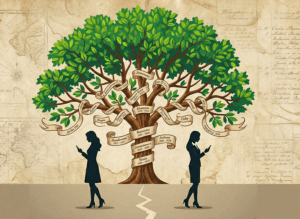
    For several years after I found out I wasn’t my Dad’s biological daughter, I couldn’t even look at his tree anymore. It was literally a full stop.  Seeing all the people I thought I came from genuinely hurt my heart. It was like breaking up with someone you love. I started doing genealogy when I was 15 years old. My paternal grandfather was still alive then and was overjoyed that I was researching the Horner family. He gave me everything he had, and he had a lot. Old photo albums dating back to the mid-1860s, heirloom jewelry, and so many bits, bobbles, papers, and original family trees written by ancestors. Most importantly, my grandfather provided the stories that went along with them. I became the voice of these ancestors so that their stories would always live on. I cherished that I could do that for them. But everything changed when I took that DNA test. One whole side of myself felt suddenly gone. Maybe being a genealogist amplified this feeling because I knew so many details and stories and felt so connected to these people. It still hurts. And what about this “new” tree I belong to? They are complete strangers that DNA tells me I’m related to. I understand intellectually they are my ancestors, and I enjoy building this tree and learning about them. But it’s like watching a movie from someone else’s life. The connection is not the same, making me feel the loss of what I had even more.  I’m disconnected from the family tree I knew yet also disconnected from the family tree I’m biologically related to. It makes me feel out of balance and anxious sometimes. I’m constantly chasing the new family, trying to feel connected. I started building the new *Callaghan tree because I had to. That’s what genealogists do when they are trying to solve a mystery. But now that the main mystery is solved, I still stare at this tree, building it out and trying to feel something towards these people. I don’t know them. I don’t share any life experiences or have stories handed down to me like it usually happens in your lifetime. My own “new” grandparents never knew they had one more grandchild out there and that I would give them three more great-grandchildren to carry on their DNA. I love a good DNA reunion story, just like the next person. I really do. DNA testing is an incredible tool for so much good. DNA connections can be joyful for people, and I would never begrudge anyone who experiences them. But every commercial and every social media post lands with me as a mixture of joy and pangs of sadness. DNA is not joyful for me, and it never will be. I wish these companies were more sensitive to that. People want to see uplifting stories; I get that. But it’s not the reality for many of us. Hopefully, we will all come to terms with our reality and find some peace with it. But the loss never completely goes away. The best an NPE can try to do is be grateful for the ancestors we once had and that we have created their legacy for someone else in our family to appreciate and love. We can still love them too, even if it feels different. The best we can do is to approach our new tree with curiosity and the ability to give them a voice, and we hope that the feeling of connection to them will come, if not in my lifetime, then for my children or grandchildren. *pseudonym This is my NPE story of discovering in 2015 that my Dad was not my biological Dad. If you’d like to follow along, I encourage you to start at my first post of the series HERE.
  • Three things to never say to an NPE
    This is my NPE story of discovering in 2015 that my Dad was not my biological Dad. If you’d like to follow along, I encourage you to start at my first post of the series HERE. When people hear my story, they all react differently. There is sympathy, most definitely. There is shock, especially if they knew me as a kid. There is a curiosity to hear all the sordid details, which is completely normal. Overall, I think it’s human nature to want to say something comforting or uplifting when you see someone struggling. People are well-meaning and kind, but they don’t realize that certain platitudes can be triggering and upsetting to us depending on where we are on this journey. I don’t expect people to know what to say. I give most everyone a pass, quite honestly, because I know people are just trying to help.  But I know many NPEs*. I am a part of one of the original online support groups for it, in fact. These three things people say to us always come up as causing us more pain rather than comfort. Here are three things you should hold yourself back from saying to someone who is an NPE. #3 You Are Still You We know what you are getting at here. We are still married to the same person, we still have the same number of children, the same values, the same job, and the same life that we had before we knew any of this. But we are trying to explain to you that a discovery like this changes you on a level deep within the core of who we are. We are not the same person anymore, and we are mourning for that person we were. This discovery profoundly affects how you live your life and how you see things. Some NPEs who did not have a good relationship with the fathers who raised them say they actually feel suddenly like a piece of them that was missing is finally in place. Things suddenly make sense to who they are and why they felt different growing up. They are changed for the better with this discovery. There are two sides to the coin. #2 Nothing Has Changed Yes, it has. It really has. Maybe not for you. But for us, everything has changed. How we identify, our medical history, ethnicities, lineage, surnames, and now there are strangers we are now linked to forever but may not ever know. I look in the mirror and see my face differently. I was always told I had my father’s blue eyes. I was the only one in my family who had blue eyes and I felt special for it because it was something just Dad and I shared. But after my discovery, I realized it wasn’t anything that Dad and I shared at all. But it was, ironically, something my biological father and I shared as well. I didn’t know how to feel about that. Finally looking like someone was new to me. Not looking like my Dad was new to me. It is confusing. I have three new siblings who don’t want me. Yet they are still my siblings and they are out there. That is a big change. On the flip side…change doesn’t have to mean just the negative things. If we have a positive reaction from new family members, then we have a whole new group of people to bring into our current families. That can be wonderful for some people. But it is still a change.  And the number one thing NOT to say to an NPE… #1 Your Dad is Still Your Dad. This is the number one thing you should not say. And for the record…this is the number one thing in NPE support groups that we talk about people saying to us and how terrible it is when you say it. We know that you think it will help us see that the word ‘Dad’ means the man who loved and raised us and that he is still our Dad. But we aren’t hearing it that way at all. You need to understand that most of us are traumatized by this. This doesn’t have anything to do with how much we love our Dad or how grateful we are that he raised us. This is about loss. This is about identity. This is about grief. Telling us our Dad is still our Dad makes us feel like you are dismissing everything we are feeling and that it’s your place to remind us that we are actually lucky that we had a Dad who loved us. As much as you care about us and want to help, you can not understand what it feels like to be lied to for 50 years of your life and be left trying to figure out who you are now that the dust has settled. It may not make sense to you, but when you say this to us, it sounds like you are shaming us. We hear, “Oh, stop making a big deal about this. You had a great Dad. Your Dad is still your Dad. ” When my Dad died, I grieved for him terribly. When I discovered he wasn’t my biological father, it felt like he had died all over again. I grieved all over again. It is a confusing mess to go through in a way that’s difficult to explain. People say these things because it makes them feel more comfortable in an uncomfortable situation. They feel compelled to say something—anything. And, yes, we know that most of the time, this is coming from a place of love—we really do. But telling us how we should feel only makes us feel worse. What You Should Say The best thing to say is to tell us you are here to listen to us. Tell us you can’t imagine what we must be going through. Just let us know that you are there for us. I promise that is enough for now. *NPE is an acronym for “Not Parent Expected.” It has also morphed into a “Non-paternal event.” This is my NPE story of discovering in 2015 that my Dad was not my biological Dad. If you’d like to follow along, I encourage you to start at my first post of the series HERE.
  • My New Biological Siblings
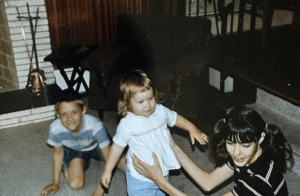
    I’m asked, “What has actually changed since my DNA discovery?” Do you mean besides the whole “losing my entire identity” thing? Well, here’s one at the top of my list. I have no full siblings anymore. It’s profound, and it’s sad for me. It’s a feeling of loss that I can’t put into words. I try not to dwell on it too much, but sometimes, it just sneaks up on me. Sometimes, I feel I don’t fully belong to any family. This is what being an NPE* feels like. If I grew up knowing I had half-siblings, maybe it wouldn’t affect me like it does. Lots of people have half-siblings. But I grew up thinking I was the youngest of five kids, and we all came from the same parents. Fifty years later, I’m suddenly the youngest of eight children, and I don’t have the same two parents as any of them. I’m different. I have one foot in each family, but I’m not even a part of one family, and they don’t seem to want me. Above: Me with my brothers and sister. It was the Spring or Summer of 1966 when I was about 15 months old. We are on the front steps of our house. I still, and always will, call the siblings I grew up with my brothers and sisters. They love me, and I love them. Nothing has changed with that, thankfully. I refer to Joe’s** kids as my half-siblings. It’s not a dig at them. I just don’t have a relationship with them, so I would feel weird calling them something so familiar. I have to keep this distinction to cope with all of this. I met all three of my half-siblings in 2017. They did not know I was their half-sister at the time, but I had just figured out the truth. I decided early on to never disrupt their life by telling them. I didn’t anticipate what an emotional burden it would become for me, though. It got so heavy to carry. It was always hanging over my head that I had to keep it secret. People don’t realize that when you are an NPE, you are forced to carry the emotional weight of a decision you had nothing to do with. It affects every part of your life and is exhausting. On July 4, 2022, I wrote a letter to my half-sister telling her what I had discovered. I kept it short and one page long. If they wanted to hear the long version of how I discovered it all, I would love to get together to talk. They all live close to me, and one is even in the same town. “Please know that I’m not looking for anything from any of you. If you are willing to share, I would be grateful to know any health history that you think I should know so that I can pass that information to my girls. I welcome a chance to talk with all of you about this, but I’ll leave the decision to you if you decide you would like to contact me or have a relationship. I had the most wonderful Dad who loved me and who I loved very much. I have a very close family and a very good life. I just want to live my truth openly, and to do that, I needed to share this with you. I’m so sorry if this feels like a burden on you and causes you pain. As I said, I hope that you won’t hold me accountable for something I had no control over.” It’s crazy that NPEs feel the need to explain early on that we don’t want the family fortune. We also feel the need to apologize for intruding. So not only do we want to share our truth with them, we have to defend and explain ourselves in the same breath. A year and a half has passed since I wrote the letter, and none of them have responded or reached out to me. In the meantime, I’m left with this other half of me that feels unsettled. I’m a part of them but have no connection with them. Are they mad at me? Are they embarrassed I exist? Are they protecting the memory of their mother that Joe cheated on? I feel sad that they don’t want to know me. But I have to learn to be ok with that and realize that they may never reach out. The fallout of my being an NPE trickles down to them, too.   *NPE is an acronym for “Not Parent Expected.” It has also morphed into a “Non-paternal event.” **pseudonym This is my NPE story of discovering in 2015 that my Dad was not my biological Dad. If you’d like to follow along, I encourage you to start at my first post of the series HERE.
  • Telling my Brothers and Sisters
    After my mother died, I didn’t have to keep my DNA discovery secret from my brothers and sisters any longer. The thought of telling them they were Dad’s biological kids, but I wasn’t, made me so scared that it made me physically sick. Scared was a new feeling in this discovery. I also cried a lot during this phase. I’m not a crier by nature. And when I say cried, I mean the kind of ugly crying that leaves you exhausted and drained afterward. I woke up with headaches and stomach aches that lasted all day.  I took naps when I got home from work and went to bed by 7:30 pm. I just didn’t want to deal with anything. My mother’s death had triggered something. I suddenly felt very vulnerable and alone in my identity. She had been the only living person I was fully related to besides my children, and now she was gone. Everything going forward was about “half” now. Half brothers and sisters, half aunts and uncles. My Dad was dead. My biological father was dead. I was grieving over all of them collectively all at once and, at the same time, feeling my own mortality in a way I had never felt before. I felt orphaned. With the realization that I had to tell my siblings, I started worrying about inconsequential things, like how I really wasn’t entitled to have any of the family knick-knacks and things from Dad’s side anymore. I wasn’t really a Horner. These things were rightfully theirs. Would they want it all now? Dumb stuff like that. Questions were running in my head non-stop. How would they think of me after I told them? How would it change the dynamic of our relationship when they find out Dad wasn’t really my father? I was so stressed out about it and afraid of how everything would change after I told them. Because it definitely would change. On top of that, leading up to telling them, I felt embarrassed and ashamed for the first and only time in this journey.  I was conceived by the act of Mom cheating on Dad with another man. My brothers and sisters were not. It felt confusing to me why I felt I needed to defend Mom, but I also wanted to commiserate and agree with them that Dad didn’t deserve what she did to him. But I wouldn’t be here otherwise. Do I apologize for what she did? I didn’t do anything wrong. I knew that. But it didn’t feel that way when it was time to tell them. It was a lot for me to process. *Going forward, I will give my siblings pseudonyms to help keep things clear. I couldn’t put it off any longer. In November of 2018, I called the three of them over to review some things with Mom’s estate. I was the Executor. I would tell them after that. My youngest brother, *Ron, lived in Oregon and would have to hear by telephone later. My voice was shaking, but after we finished talking about estate stuff, I just dove in and blurted it out. “I have something to tell you that’s hard to say. I discovered that Dad isn’t my biological father.” They all looked shocked. It took a minute to sink in and process what I had just said. My youngest sister, *Rose, was visibly crushed. She was ten years old when I was born. She wasn’t having any of this. She kept saying, “No, I don’t believe any of that DNA stuff. You look just like Grammy.” She was growing fidgety as the conversation continued, and she took big breaths in and out. My oldest brother, *Chris, was silent. He was a man of few words, so that didn’t surprise me. But then my oldest sister, *Lisa, said something surprising. “Well, you know,” she said, “There was always a suspicion.” What?? When Lisa was twelve years old, she asked our mother, “Who is Jenny’s Daddy?” I had just been born.  Lisa said Mom just laughed it off. That was crazy for me to hear.  What made her think that? Lisa didn’t really know, but I just didn’t look like any of them, and her question was really based on being naive and not understanding that we should all have the same Daddy. But she thinks it was always a thought in the back of her mind. I felt afraid to say *Joe’s name out loud for some reason, so I asked them if they had any guesses about who my biological father was. “*Joe Callaghan,” Lisa answered. It wasn’t even a question. She stated it like it was a fact. She said she didn’t know for sure until now, but Lisa remembered the flirtation between them and always thought Mom and Joe were in love.  Lisa thought it was weird that Joe kept coming over to visit Mom in the evenings for so many years. She thought Joe had a reputation as a “philanderer.” Whether she picked up some sort of vibe when she went into Joe’s market with Mom, she couldn’t remember, but she felt housewives vied for Joe’s attention, and there was jealousy amongst them. Rose said she did remember Mom having a falling out with a woman who worked there. Was that fall out over me? Or over the attention he gave Mom? Chris finally spoke. “Yeah, I guess I’m not overly surprised.” Pressing him further, he just shrugged his shoulders and said he also remembered Joe coming over to the house, and it all made sense now that it was said out loud. They had a lot of questions about how I found out, how I figured out it was Joe, and what the conversation with Mom was like. They understood why I didn’t tell them until after she had died. There was some good-natured teasing and some tears. They tried to downplay it as if it wasn’t any big deal to them. I know they mostly did that so that I wouldn’t feel uncomfortable. But I could also tell they felt sad for me. Sorry for what I had been going through, yes, but also sad that I would have to find a way to live with it all.  The fact was, I was different from them now, and we all felt it that night on some level.  Later, I called my brother, Ron, in Oregon and told him. He responded with a joke about the milkman and some awkward but loving words. That was his way, and that was honestly ok with me. I didn’t want to get deep into it again. I was so mentally exhausted after it was over that I could only crawl into bed and sleep. That Christmas, my sisters each gave me a card. Rose signed hers, “From your REAL family.” She was still struggling. Lisa wrote, “Nothing has changed in my mind. You are still my sister, and you are an amazing woman.” People don’t understand that the NPE experience doesn’t just affect the NPE. It’s a ripple effect that spreads out to anyone in your life who loves you. *pseudonym This is my NPE story of discovering in 2015 that my Dad was not my biological Dad. If you’d like to follow along, I encourage you to start at my first post of the series HERE.
  • Being Good or Being Perfect?
    The other day, I listened to a podcast about *NPEs. The woman being interviewed said she started her own podcast to take away her mom’s shame. This hit hard for me. Since I’ve gone public with my story, I’ve had this underlying defensive feeling that I haven’t been able to put my finger on. What I was feeling suddenly made sense to me. Hearing this reinforced a realization: the shaming of our mothers needs to stop. People have asked me, “How did you feel about your mother after you found out?” My answer has always been that judging her for having an affair just wasn’t important to me. It happened. I’m here. What good is judging someone over something she couldn’t take back? I didn’t have the strength to start pointing fingers when I was dealing with the trauma over the realization that I didn’t know who I was anymore. For me, moral judgment on how I got here seemed ridiculous at this point. I can see that a few people are visibly holding back judgment on Mom’s character when they hear my story. However, interestingly, I haven’t seen any judgment towards my biological father, who did exactly the same thing. In fact, the term “ladies’ man” has been bantered around a few times. That’s an unfair double standard. Mom was a good person. How you interpret the word “good” is up to you, I guess. To me, being “good” doesn’t equate to being “perfect.” She was flawed, just like every other human being on the planet. She made plenty of mistakes in her life, I’m sure. But I don’t consider myself a mistake. When you are silently shaming her, you are unintentionally trying to shame me into feeling I am not worthy to have been born. I’m not ashamed of being born; in fact, I’m pretty happy about it. My mother and biological father made me, and that’s a fact that doesn’t change. Neither one of them was perfect, but they were both good people. Mom didn’t know how badly I was struggling emotionally with this discovery. I hid that from her. That was my choice. She was ill, and I knew she needed my forgiveness more than anything else before she died. She felt shame. I didn’t believe she deserved to feel that way. When Mom passed away on December 29, 2017, she was just one month shy of her 90th birthday. It had been eleven months since she confirmed who my biological father was, and two years after I discovered the truth. Back on the road to my journey, I was now free to share with my brothers and sisters what I was dreading. This was going to be the most difficult conversation of all.   *The term NPE is a term for those of us who have discovered one of our parents isn’t who we thought they were – Not Parent Expected. This is my NPE story of discovering in 2015 that my Dad was not my biological Dad. If you’d like to follow along, I encourage you to start at my first post of the series HERE.
  • Telling the Girls
      I knew that eventually, I had to tell our girls about my DNA discovery. This was about their DNA, too. I had made the decision not to tell my siblings until after my mother had passed away, but I felt the longer I waited to tell the girls, it would be no different than my mother keeping it a secret from me all those years. I decided to tell them at Easter. If you’re keeping up, it is now the Spring of 2017. Our “girls” were actually all grown women, ages 27, 26, and 23. Our two oldest lived out of state. They were in high school and college when Dad passed away, and they have special memories and funny stories about him. He would read to them, make crossword puzzles for them, and bond with them over random things, like the fact that they were all in marching band in high school. Dad was just a sweet man, and it was impossible not to love him because of it. After the traditional Easter breakfast at my in-laws’ house, I told the girls I needed to talk with them about something when we got home. They were intrigued and curious. When we arrived home, the girls immediately sat in the family room. This was the room of many family talks in the past. I sat on the couch and waited a minute to collect my thoughts. My husband, Fred, was nearby in the kitchen, waiting for the tough part to be over. Deep talks were not his comfort zone. “OK, so I wanted to wait until I had you all together before I told you something I discovered recently.” I began. I looked at the girls, and they were absolutely fixated on me. It was only the third time I had said this out loud since I found out, and my voice was shaky. “I discovered that Grandad isn’t my biological father.” I let it sit there for a minute, lingering in the air. I looked at each of them for their reaction. All of their mouths dropped open, and their eyes were big. They were silent. Our middle daughter, Katie, was the first to speak, “Well, that explains a lot!” she laughed nervously. After that comment, Fred sensed it was safe to come back into the room and said, “I know, right?” Fred is good at easing the tension in a situation, and he spent a minute or two making light of how lucky I was not to look or act like my family. The girls knew he was just kidding around and trying to lighten the mood. They all laughed. I knew the worst was over. I recounted the journey of discovery to them. They had plenty of questions. The first question was whether I knew who my biological father was. I told them who he was and showed them *Joe’s photo. They didn’t react much either way, looking at it. They were still processing it all, I could tell. Our youngest, the most sensitive of the three, was quieter about it all. Her first question: “Did Grandad know? I told her that Grandma Lee had said no, that he didn’t know. I said I was giving my mother time to be more forthcoming when I talked to her again. The news rattled them, but they were more concerned about how I was handling it. Questions would come in the coming days and months, and even to this day, as they processed it all and what it meant to them. They asked medical questions ( I didn’t know much). They asked if I was going to reach out to my bio half-siblings (a big NO at that time, I told them). They asked me to text them a photo of Joe, so they could study him more closely. They were insanely curious about what other bio family members looked like. It was surreal to them. But they handled it all so much better than I did. I asked them not to share this with their cousins on either side yet because I knew the next people who should know were my brothers and sisters who I grew up with. I felt so relieved that the girls now knew, but I wasn’t ready to even think of telling my brother and sisters. *pseudonym This is my NPE story of discovering in 2015 that my Dad was not my biological Dad. If you’d like to follow along, I encourage you to start at my first post of the series HERE.
  • The Acceptance of Not Learning More
    I wish I could tell you that now that the ice was broken with Mom about who my biological father was, that she opened up and shared countless stories about *Joe. But she didn’t. The simple fact was Mom was embarrassed, and frankly, she didn’t want to talk about it ever again. She didn’t ask me not tell my brothers and sisters until after she was gone, but I knew she was worried about that because she kept asking me if I was going to tell them. So I decided after that first conversation, there was no gain in causing her pain by telling them while she was still living. Her time was short, and we all knew that. There was nothing I would gain from it, either. I don’t regret that choice. I had three short conversations with Mom about it all after that day, and it was like pulling teeth to get her to participate. In one conversation, I told her my memories of Joe were very few, and if she felt like jotting down anything about him on paper, I would love that. She didn’t react at all and pretended not to hear me. I knew she would never do it. Another time, I asked her whether she thought I looked like Joe or had any of his traits. “No,” she said curtly. She seemed annoyed that I wouldn’t stop asking her things about it. I asked her about Joe’s parents. Did she know them? She answered she didn’t know Joe’s mother, but she knew Joe’s father very well because he still puttered around the store back then, even though he had handed it over to Joe to run. She had positive things to say about Joe Sr., saying he was well respected in town. She recounted a funny story of Joe Jr. having to keep an eye on the pickle jars in the store because, near the end of his life, Joe Sr. would sometimes pop open a jar, take a big sip of pickle juice, screw the lid back on, and put it back on the shelf for sale. He was losing it a bit, according to my mother. He died a week before I was born on February 8, 1965. Her relationship with Joe was something she would never speak directly about. I would piece together their relationship from my own memories and those of my siblings and photos I found after she died. Our conversations were generally back and forth, with her giving me short, quick answers like the following: Me: “Why didn’t you ever tell me?” Mom: “Oh, it wouldn’t have helped anyone.” Me: “Did his wife know?” Mom: “No.” Me: “Did he ask about me?” Mom: “No. But I called him to tell him things.” Me: “What kind of things?” Mom: “College. When you got married. When you had the girls.” Me: “Did he like hearing about those things?” Mom: “Yes.” There was little else she would share beyond a few things I already knew. I realized I was never going to learn more, and that frustrated me tremendously. But one day, on my final try, I finally got something from her. We were sitting casually in her living room, chatting. I told her I remembered going into Joe’s store and shopping with the little child-sized metal shopping cart that was always there. (Read more about that in a past post HERE.) I reminded her how I loved putting my dolls in the cart and shopping for our cat’s food by myself. “Remember that little cart?” I asked her. She didn’t miss a beat. “He bought that for you,” she answered. My mouth dropped open. I was genuinely stunned. What?? “You mean for all the little kids that came in?” I asked. “No,” she said firmly, shaking her head and looking right at me. “Just for you.” She went on, “Once you were old enough to push it, he bought it for you to keep at the store when you came in. Oh sure, other kids used it too. ” I became emotional hearing this. One of the clear memories I have of interacting with Joe was with that shopping cart. Learning he bought it with me in mind was indescribable. It made me happy and sad at the same time. I would never really know him, and I would probably never be able to publicly claim him as my father. That was the reality of my paternity. But this small thing meant everything to me. It was the only true link I had between him and me. And it had to be enough. *pseudonym This is my NPE story of discovering in 2015 that my Dad was not my biological Dad. If you’d like to follow along, I encourage you to start at my first post of the series HERE.
  • Mom and Dad’s marriage
    I don’t remember my parents being married or acting like a married couple. But I didn’t understand they were divorced, either. No one told me, thinking I was too young to understand. One of the earliest memories I have, though, is of Dad sleeping downstairs in our family room. I was about five years old. I remember it well because I thought what great fun it must have been to sleep anywhere you wanted. They officially divorced when I was eight. I didn’t fully understand that they were divorced or what divorce even meant for two legitimate reasons. First, I didn’t have any other divorced parents to compare to. None of my friends’ parents were divorced. Secondly, my Dad was always at the house. Dad came home from work every day and had dinner with us. After dinner, he would sit in his living room chair with the Hartford Times and do the crossword puzzle. Sometimes, he would come downstairs to the family room to watch TV with us all. Then, at 9 p.m., he would go home to his own place, about 15 minutes away. Mom is the one who wanted the divorce. She was not happy, she would say to me years later. There was no talk between *Joe and Mom that they would leave their spouses to be together. So Joe stayed with his wife, and Mom stayed with Dad. For a few years, anyhow. Like a lot of men back in the late 1960’s, Dad didn’t know how to cook or do his own laundry. He also didn’t really have friends. We were his world. So Mom was as gentle about it all as she could be and let him come and go as he pleased. As I got older and understood life a little better, I realized that my mother didn’t have it easy with the neighborhood mothers after she and Dad divorced. It was a stigma, and they were judgmental. Maybe they all suspected that I wasn’t my Dad’s child. Most of them shopped at *Joe’s market. Did they witness one of those kisses in the parking lot between them? Was there gossip? Was I actually a big secret drama in our community? Regardless, there were a few moms who seemed cool and distant to Mom for no outward reason I could see, and in retrospect, they kept their husbands locked up and my mother at arm’s length. Mom waited until her own father passed away before she filed for divorce. I think that was a deliberate decision. She knew her father would be disappointed in her, and she loved him deeply. Her mother was certainly disappointed in her, and she voiced that often for the rest of her life. I think Mom worked very hard to show people that we could still be a family. Dad still mowed the lawn. He still took us places. We still did things as a family. For whatever reason, it worked for everyone involved. It was when I was about nine that my older sister explained to me that they were divorced. Why my mother didn’t explain it to me, I don’t know. With the setup we had, it honestly made no difference to me. I didn’t realize how unusual the situation was, and I didn’t know any other way of life. I finally realized it was weird when a friend slept over one Friday night when I was eight. We were playing in the living room, and Dad came over to me, rumpled my hair, and said goodnight. He then walked out the door. My friend Jayme asked, “Where is your Daddy going?” Without missing a beat, I said, “To his house.” She looked at me, confused. From the look on her face, I immediately realized it wasn’t typical for daddies to live somewhere else. That was the first time I felt really different from my friends. The most important question I asked my mother after I found out was if Dad knew I wasn’t his biological daughter. It was more important to me than if Joe knew I was his, actually. She said Dad didn’t know. Once I discovered I was not Dad’s, I racked my brain for situations or feelings where he treated me differently as I was growing up. But there just weren’t any. Dad and I were close. I tagged along with him everywhere. I feel sure he did not know. I was immensely relieved when Mom said that. Dad never truly accepted the divorce and pined for Mom for the rest of his life, which is both sad and beautiful. He always referred to her as his wife in front of others. There was always a bond there. Mom came up from Florida to see Dad during his last weeks of life in 2009. She still loved him, but it was just on a different level. One of the most touching things I witnessed was her feeding him in the nursing home when he was too weak to do it himself. When you’ve shared a lifetime together, with five children, nine grandchildren, and one great-grandchild together, despite a divorce–there is a love there that never completely goes away. I feel grateful for witnessing that.   *pseudonym This is my NPE story of discovering in 2015 that my Dad was not my biological Dad. If you’d like to follow along, I encourage you start at my first post of the series HERE.
  • Mom’s secret is revealed
    “I wasn’t ever going to tell you.” Those were Mom’s first words after I sat down with her and told her what I knew. Her words stung. It was the only time I could remember having a flash of anger towards her. Really?? One year, ten months, and six days after I sat in my bed looking at those DNA results, and my world started spinning off its axis — Mom confirmed to me that my Dad was not my biological father and that Joe Callaghan was.   I called Mom to let her know I’d be stopping by. I knew my sister, who she was living with, would be working all day and wouldn’t be home to overhear anything. It was Presidents’ Day, and I had the day off. Mom had just turned 89 a few weeks earlier. She was thrilled to hear I was stopping by and always enjoyed a visit. Mom greets me at the door, wearing big furry gloves and her winter jacket. She and my sister are at war over the thermostat. My sister was menopausal and liked the apartment cool. Mom’s health issues made her always cold. Mom liked the place roasting hot. My sister means well, but she is stubborn and thinks she can sneak that heat down low when Mom isn’t looking. I hugged Mom hello, and after some small talk and me boosting the thermostat to eighty degrees, we sat in the living room to chat. Mom asked about my recent trip to Utah (for the RootsTech conference). She always worries when I fly somewhere and is not a big fan of women traveling alone, in particular. My recent genealogy conference seems like a pretty good opportunity to bring up THE subject. Mom sat with her coat and gloves finally off and the cup of hot tea I made her in her hands, holding it up close to her face. I sat diagonally across from her on the couch. I grabbed a pillow to put on my lap. I have no idea why. It was just a shield or comfort of some sort, I guess. “Mom.” I started, “I came here to talk to you for a specific reason. And I’m sorry I couldn’t give you a heads up about why, but since your hearing isn’t that good on the phone, I didn’t want to try to explain that way.” Mom looked at me, concerned. She held her teacup tighter to her chest. “Are you sick?” she asked I shook my head. “No, Mom, I’m fine. I wanted to tell you about something I discovered recently.” Mom looked suddenly shaken and afraid. I panicked for a moment and wondered if this was a good idea after all. I moved closer to the edge of the couch so that I was touching her knee. “Mom, it’s fine. I’m OK. Things are OK. But I need to share something with you.” “I don’t want to know,” she said. I noticed a look on her face I had never seen before. She was scared. Now what, I thought? Is it fair to do this to her? I already know the truth. Will I be pushing her too much? “You don’t want me to tell you?” I said. “Well…maybe you’d better.” She finally said, still holding her tea close. She closed her eyes as if she was bracing for me to punch her. This was not typical Mom behavior. She was the strongest woman I know. All I can think of is that she must have had some inkling as to what I was about to say. “Mom. Mom. Open your eyes. It’s OK. Really. No worries about anything, OK?” I said, rubbing her knee. She opened her eyes. I started in. “When I was doing all that DNA testing, I found out something really surprising.” I watched for her reaction. There was none. She was frozen, and her eyes were fixed on me. “I found out that Dad is not my biological Dad,” I said gently. “And I found that *Joe Callaghan is.” Mom took a moment to respond. She closed her eyes. Then opened them. “I wasn’t ever going to tell you.” She finally said. I nodded, but I was annoyed by that answer. She was planning on taking this with her. I had no doubts about that. A few moments passed. “How did you know it was Joe?” She asked, genuinely interested in the answer. She seemed floored that I had figured it out. I explained to her the process of comparing the results with my brothers and sisters, not matching Dad’s first cousin at all, and finally, the contact from the Callaghan DNA cousin that linked us through Joe’s grandmother. I told her this wasn’t a conversation about judgment, and that her relationship with Dad and Joe wasn’t my business. I wasn’t going to ask her about any of that. But I did have at least two questions for her. I asked her about whether she ever doubted Joe was my bio father. “Did you know for sure?” “How could I not know? Yes. I knew.” She answered. I see Mom is still stiff and unmoving, and I say to her, “Mom….listen. I’m OK. If it had to be anyone, I’m glad it was Joe. I know he was a good man.” She immediately relaxed and seemed to take a breath for the first time since I started speaking. I heard myself tell her things I knew she needed to hear, but honestly, I knew in my heart I wasn’t accepting even to myself. “Nothing has changed.” “They are still my brothers and sisters.” “Dad is still my Dad.” “I don’t think of him any differently.” “I’ve accepted it.” “I’m OK.” “I don’t judge you.” “I still love you.” “I’m not planning on telling any of the other kids or my own kids any time soon.” “I have no intention to contact the Callaghan family and disrupt their lives.” Each sentence I said pulled my mother farther and farther down from the ledge. I saw that she needed to hear them desperately. I can deal with my stuff later, I thought. She needs this forgiveness, and I am the only one who can give it to her. She seemed completely and utterly relieved at my words. “I do have another question, though,” I say. Mom looks nervous, but I see her strength come through. She sits up straight like she is ready for the blow. “Did Joe know?” I ask She wavers for a moment and gestures with her hand dismissively. “It was 50 years ago.” She pretends not to remember. But she sees I’m not buying that. I just look at her. Then she scrunches up her face and reaches back into her memory. “I did tell him, yes.” She chooses her words carefully. “He denied it at first.” I asked her what happened next. “Well, I just said, noooo… It’s you.” She seemed to not want to talk about this anymore. I could see her mood had switched to embarrassment. I’m sure there is more to this conversation and “understanding” between them. I let it go. I will dig deeper next time if she lets me. *pseudonym This is my NPE story of discovering in 2015 that my Dad was not my biological Dad. If you’d like to follow along, I encourage you start at my first post of the series HERE.
  • The little shopping cart
    In 1996, I was a full-time stay-at-home Mom to our three young daughters, all under 6. I turned 31 years old that year. Fred and I were married in 1988, and we bought a house in the same town where we both grew up. We hadn’t planned it that way, but we just really loved this split-level house with a big backyard on a cul-de-sac where our girls could grow up. I had a routine every morning: getting the girls up, fed, and dressed, and starting our daily activities. But before the end of the day, I had a routine that I always read the newspaper from cover to cover. It might be just a page at a time, but I always did it. It was a habit I enjoyed and learned as a journalism student at Southern CT State University in New Haven. We were required to read at least one of our two major dailies, The Hartford Courant or the New Haven Register. My mommy’s brain appreciated this daily connection to the outside world. One afternoon, with one daughter in afternoon kindergarten, one in afternoon pre-school, and one upstairs napping, I sat down for a luxurious 15 minutes with a Diet Pepsi and my newspaper. I turned to the obituaries. From the Hartford Courant that day: *CALLAGHAN, Joseph J. Jr., 77 , a former grocer and town leader, beloved husband of Susan (Miller) Callaghan* died Tuesday, (October 8 1996) at his home. I felt instantly sad. I fondly remembered Joe’s little market and how loving he was to me as a child. I immediately picked up the phone to call my mother, who lived in Massachusetts at the time. I was sure she would want to know. I, of course, had no idea he was my biological father at the time. I wouldn’t learn that until 19 years later. “Mom, guess who died?” I said. “Joe Callaghan.” There was silence on the other end of the phone. I remember that clearly because I was slightly annoyed Mom wasn’t responding to me. Looking back now, I realize my mother was probably shocked and saddened. I said something to her like, “That’s too bad, isn’t it?” waiting for her response. “Ohhhhhhhh” was all my mother said. I hadn’t thought about him in many years, probably since I was a teenager. I asked Mom if she was still in touch with him and if she knew if he had been sick. At 77, he wasn’t really that old. My mother still wasn’t saying much, but she replied that she had tried to call him a few days earlier and got no answer. Feeling like I was getting nowhere in this conversation and hearing my youngest waking up from her nap, I asked her if she wanted me to clip out the obituary for her and bring it up when I saw her that coming weekend. She said simply, “Yes, please. I would like to see it.” The obituary listed the many civic and business organizations Joe had participated in. He had been a longtime volunteer with the Fire Department, was involved in many civic organizations, and was a respected businessman. He was also a Master Sergeant in the United States Marine Corps during World War II. The obituary mentioned that he had marched in our local Memorial Day parade every year since he returned from WWII and that he had frequently raised the flag on the Town Green. Fun fact: After discovering in 2015 that he was my biological father, I suddenly remembered a photo of him on Memorial Day in one of our family photo albums. Which is wild, if you think about it. And it was also wild that I was a Brownie, so we definitely marched in many of the same parades in our town. I can’t get over that fact. More from the Hartford Courant obituary that I look at now and feel a pang I’m not sure how to describe: This past June he and his wife celebrated their 50th wedding anniversary. Besides his wife he leaves two sons and a daughter-in-law, a daughter, two sisters and a brother-in-law; two grandchildren and many nieces and nephews. I learned a lot about him from his obituary. I remember him in my earliest memories, greeting my mother and me when we would go into the market. I was about 3 or 4 years old. He would make a fuss about me, which, of course, I loved. I assumed he did that with all the kids who came in. And he probably did. He loved children and was very childlike and easygoing himself. The best part about going into his market was the little metal shopping cart he had there. It was child-sized, and I absolutely loved it. After a big hug from him, I would scamper away to begin my “shopping.” Being a small town market, there were only two aisles, and my mother would let me go off on my own to pick out the cat food cans for our cat, Bootsy. Off I would go. After I filled my shopping cart with Bootsy’s food, I would find my mother, and we would finish shopping together. I would go through the checkout first, taking each can out of my shopping cart and putting it on the counter. Mrs. Weston* was one of the nice ladies who worked there. She would make a big fuss about how big a girl I was for shopping all by myself. My mother was right behind me, of course. Many times, Joe would leave the butcher counter, walk us to our station wagon, and load the groceries into it. I would stand on the folded-down back hatchback and hug him goodbye. If I felt silly, I would hang around his neck, and he would swing me around. Then, he would give my mother a peck on the lips and say goodbye to us both. It’s incredible to me that I never really thought there was anything strange about that kiss. It’s hard to describe, but I had forgotten I remembered all this. I don’t know if that even makes sense to say out loud. But it was like finding out Joe was my biological father that unlocked all these memories. Armed with these memories, DNA results, and my gut instincts, I was ready to talk with my mother. I knew it would be a difficult conversation. *pseudonym This is my NPE story of discovering in 2015 that my Dad was not my biological Dad. If you’d like to follow along, I encourage you start at my first post of the series HERE.
  • The Stranger who Became a Friend
    It was September 15, 2016. Eighteen months since I discovered my Dad wasn’t my Dad. I still hadn’t told anyone my secret, not even my husband. I know that sounds crazy. I hadn’t confronted my mother with my discovery yet, either. Looking back, I know there’s a term for how I wasn’t dealing with it. It’s called trauma denial. A Google description explains, “Trauma denial often occurs when the reality of the trauma is so great that it is psychologically safer to bury, deny, suppress, or avoid what happened.” Totally accurate description of me during those eighteen months. But on that particular night of September 15, the dam was about to break. I was scrolling mindlessly on Facebook, trying to escape. Something from the New England Historic Genealogical Society caught my eye. They just released a new book, “The Stranger in My Genes,” by Bill Griffeth. The words “DNA test” and “father, not his biological father” jumped out at me, and I stopped dead in my tracks to read the entire post. I bought the book and downloaded it immediately on my Kindle. I had an almost desperate feeling as I started reading it. It was a life-changing moment for me. For the very first time since this whole nightmare began, I felt seen and validated. I felt the gamut of emotions reading Bill’s book, which was heartfelt, honest, vulnerable, and so moving I couldn’t stop thinking about it. I reread it the next night and stayed up all night again. Then I went back and read specific paragraphs and sentences, underlining the most meaningful ones that spoke to me. I had exclamation points in the margins. There was someone else out there who felt what I felt. Bill was a well-respected financial news anchor on CNBC at the time. He was also an avid genealogist. Like me, he wasn’t especially interested in DNA either, but he took a test in 2012 at his cousin’s urging, who was also a genealogist. Weeks later, Bill was at work when his cousin emailed him and told him that Bill’s Dad couldn’t possibly be his biological father based on the DNA results. After retaking the test (”Obviously, there was a mistake”) and having his brother test, the reality hit him hard that it was true. He struggled with the same feelings of loss of identity that I did. Bill writes about his journey in such detail, the highs and lows of his grief process, his conversation with his mother, and trying his best to move forward, living his new truth. I became obsessed with contacting Bill and communicating with him. I finally found him on Twitter. But I couldn’t tweet anything to him publicly because I was afraid that family and friends who followed me on Twitter would discover my secret. So I tried to message him. But I discovered we had to be following each other to DM. So, I followed him, and then I tweeted to him: Thankfully, he didn’t think it was too weird, and he followed me almost immediately, messaged me, and said, “What can I do for you, Jenny?” It all came pouring out of me like a fountain. The poor guy probably didn’t know what hit him. I think he could sense that if I was reaching out to a stranger, I must be really distraught. Over the next several days, I couldn’t stop writing to him about what I had discovered, what I had been through, and how heartbroken and grief-stricken I was at this discovery. I wrote until I felt emotionally drained. They say people come into your life for a reason. Bill and I are good friends to this day. I was on the verge of a nervous breakdown, and I credit Bill’s calm and steady reassurance as helping me through it all. He encouraged me to feel whatever I felt and not apologize for it. He encouraged me to journal. He shared his struggles, even though it had been over four years for him. He made me realize that there was no blueprint for this. There was no right or wrong way to feel. There was no “getting over” this, but I could “get through” this. I could live with this. Even if it still hurt. I told my husband shortly after I read Bill’s book. And, of course…it was a tremendous, tremendous relief to be able to talk about it with him. My husband felt terrible that I kept it to myself for so long. But, after being married to me for over 25 years, he knew how I needed to do things in my own time. And it took a stranger to kick-start this part of my journey. MY next hurdle to face was gearing up to talk to Mom. I couldn’t wait much longer because of her declining health. This is my NPE story of discovering in 2015 that my Dad was not my biological Dad. If you’d like to follow along, I encourage you start at my first post of the series HERE.
  • Working it Out
    Surprisingly, I wasn’t anxious to find out who my biological father was because, with every passing day, I felt in my gut that I already knew who it was. I was bouncing all around through those stages of grief, and depression was a big one now.  Long-forgotten memories started to slowly become conscious ones. When I was about ten years old, I was snooping through my mother’s wallet, and I found a photo of him tucked away between pictures of us kids. I didn’t particularly understand why, but I never questioned it. And I couldn’t ask her about it because I would get in trouble for snooping through her things. Certain things were making sense now, like the memories of him coming to our house often when I was a pre-teen. He and my mother would sit in the living room over a beverage and chat. They would catch each other up on their lives. All of us kids were milling around, so nothing funny was happening. He would stay for an hour or two, say goodbye to all of us, and then leave. Honestly, I was more interested in watching the Partridge Family, so I never really gave it any thought and would head down to our family room to watch TV. I was either the most innocent kid in the world or the dumbest. I don’t know which. But sometime during that early summer of 2016, I suddenly had renewed energy bordering on anger. A year had passed since I had gotten those original results. Now, I had an overwhelming need to know who I was and to prove who my biological father was. I chose a time when I wouldn’t have any distractions, opened up my Ancestry account, clicked on “Create a New Tree,” and named the tree with his surname. I made the tree private and unsearchable and typed his name as the home person: Joseph Callaghan*. *For ease of telling my story, I will refer to him by this pseudonym. Other pseudonyms will also have an asterisk the first time I mention them. It gets too confusing keeping track of who I am talking about otherwise. Even though all parties named here have passed away, I’m really not ready to publicly reveal his name, and I’m not sure if I ever will be. I didn’t really know any details about Joseph except for his first and last name and that he lived in the same town as I did at some point. I knew he owned and operated a small market and butcher shop that was started by his father. I searched his name, the town, the state, and a vague guess of his birth year. The first record that came up was the 1920 census for my town. A household with a grandmother named Julia, a mother named Katherine, a father named Joseph*, a daughter age two named Helen, and a 10-month-old baby boy named Joseph Jr. were listed. I scanned my eyes across the document, and under father’s industry, it said, “Meat Market.” Bingo. That 10-month-old is surely him, I thought.  Now that I had what I felt was a solid foundation, I continued on, gathering census records, military records, city directories, and yearbook photos, fleshing out the man who might be my biological father. In all honesty, it took me all of 45 minutes to figure it out. The truth had been hiding in plain sight for two years, really. I didn’t have to look any further than his parents and the woman who, two years earlier, contacted me because I was a second cousin DNA match to her father. In this woman’s tree was Joseph’s mother, who turned out to be the great aunt of her father. I connected all the dots. There it was. Joseph Callaghan was my biological father. He lived less than 10 minutes away from me my entire life. This is my NPE story of discovering in 2015 that my Dad was not my biological Dad. If you’d like to follow along, I encourage you start at my first post of the series HERE.
  • Meet My Mom
    After discovering I was an NPE, I wanted to look at my mother’s life. I wanted to understand her more. My mother hated the name Martha Lee. She lived her life avoiding it whenever she could. I remember my grandmother sometimes calling her M.L. Mom felt M.L. was much better than the grating “Maaatha Lee” she was called growing up near Boston. As an adult, she was just Lee. Mom was born to an upper-class family on January 31, 1928, in Swampscott, Massachusetts. Her father was an insurance salesman with deep New England roots. She adored her father. The feeling was mutual. Mom was the youngest. She had one older sister, my Aunt Jean. While Jean was dainty, scholarly, demur, and classically pretty, Mom was more of an early version of Carol Burnett. She was skinny and gawky with a broad, gummy smile and hated school. I always felt that Mom never thought she was good enough compared to her sister. My mother was very different from my friends’ mothers. I knew this from a very early age. My parents divorced when I was eight years old. In 1973, none of my other friends had divorced parents. My mother was definitely judged for being divorced, and I felt it for her. But Mom was a strong woman, and she didn’t let that judgment stop her from living her life as she thought she needed to. She had a lot of layers to her. She worked full-time when other moms in our neighborhood didn’t. She was practical and realistic about life. She had a big, toothy smile and laughed a lot. Mom had a gregarious personality and many male and female friends her entire life. She liked a good Manhattan or Martini and believed women should never order their own drinks because it wasn’t ladylike. She enjoyed life. She was also a very good mom who was extremely dedicated to us kids. She was loving and attentive to us all. Dinner was at 6 pm every night like clockwork, and she expected us all to be there. She was a terrible cook, by the way. But we always had a hot dinner with meat, veggies, and potatoes. Tradition and holidays were very important to her. She gave us all Christmas stockings and Easter baskets well into our adulthood when we all had families of our own. Dad was still in the picture, and I credit her for ensuring he was always there. Mom was surprisingly very faith-driven. She went to church every single Sunday. The Episcopal Church was a big part of our lives growing up. She was involved in groups, was a coffee hour hostess, and even taught Sunday School. Looking back at my mother’s life, she was ahead of her time and sometimes struggled with it. She grew up in a generation where gender roles were clearly declared. If you were a woman, you were expected to get married and have a family while your husband worked. She worked hard to balance the roles of a “traditional” wife and mother with her yearning to be adventurous and independent. She knew she had disappointed people along the way with her choices. My grandmother was embarrassed to admit to people that her daughter was divorced. My mother was always chasing approval from her parents, but she also wasn’t someone who lived with regrets. It is very confusing to continue loving someone who has lied to you for 50 years. But that is where I found myself. Instead of dwelling on that, my immediate focus was to find out who my biological father was. I wasn’t ready to ask Mom that question because if she had denied it, I could never feel the same way about her again for denying what I already knew. I had to do what I do best as a genealogist and prove who he was. At this point, I had an idea who it might be. I remembered him from many years ago while I was growing up. This is my NPE story of discovering in 2015 that my Dad was not my biological Dad. If you’d like to follow along, I encourage you start at my first post of the series HERE.
  • Facing Denial
    I’m sure you don’t need three guesses to guess what the DNA results were to my youngest brother. His results came a few weeks after I compared with my sisters. Of course, he was a full sibling to my other brother and to my sisters. Which meant, of course, he was only a half-sibling with me. It was all there in black and white. I still didn’t know much about DNA, but after the three other results, I at least knew what to look for. Looking back, it’s painful to realize I was holding out some kind of unrealistic hope that maybe we were full siblings. He and I were always close as kids.  I desperately didn’t want to be alone in my DNA. But, unlike previous results, I didn’t react at all when I compared him and me. I just stared at the words and the numbers. I was just quiet.  It was no defining moment. I closed his profile and went to sleep. Thinking back, I needed my brain to process it all. I went along for several days like that. Feeling nothing. The last blazing glory of denial doing what it did best. We all know that the defining moment of any situation eventually happens. No matter how much I wanted to look away, it came. The final DNA results came in shortly after. My Dad’s first cousin. In my mind, these were the final results I needed. If it showed she and I weren’t biologically related then it was really over. Oddly, my body already knew the results before I actually read them. I had a terrible headache all day.  I felt funny and shaky, and nauseous when I sat down at my computer to open the profile. As if I was somehow punishing myself, I compared everyone in birth order, knowing that I would be the last one in the line. One by one, I opened the profiles and compared Dad’s cousin with us all. My brother, 13 years older older than me…452 centimorgans shared with her. My sister, 12 years older than me…502 centimorgans shared with her.  My sister, 10 years older than me…423 centimorgans shared with her. My brother, 6 years older than me…612 centimorgans shared with her. All had an estimated relationship of first cousin 1x removed. Right on point with being related to a first cousin of Dad’s. I had learned enough about DNA by now to understand what I was looking at. And then, finally, I compared her to me. “No shared DNA detected.” Zero centimorgans shared. If there ever was a moment that was defining for me, it was this one. The jig was up.  I felt the grief pour down over me from the top of my head this time. It is so strange how I felt these feelings in so many different ways through my body at each revelation. What was significantly different this time was that, as dramatic as it sounds, this time, I literally felt my heart breaking. It was an actual feeling in my chest I’ll never forget. There was no other straw to grasp at. It was finished. The quiet weeping began. I hadn’t shed a tear up to this point.  I realized in that one millisecond I didn’t have any full siblings anymore. I felt instantly exhausted. I felt confused. Who am I? Why is this happening to me? Who is my biological father? Will my siblings still love me when they find out? Why did Mom lie to me? How can I ever live with this? I had a million questions and a million feelings all at once. This is my NPE story of discovering in 2015 that my Dad was not my biological Dad. If you’d like to follow along, I encourage you start at my first post of the series HERE.
  • Stages of Grief Journey: Denial Part 2
    I was checking the 23andMe website three or four times a day. The first results that came in were for my oldest sister. She is twelve years older than me. I decided to wait for my other sister’s results to come in so that I could look at them together. Hers came just a few days later. As obsessed and impatient as I was to start getting these results in, the reality was hitting me, and I was doing everything to avoid looking at them. Hello again, denial. Finally, one evening not long after I received notice that my second sister’s results were in, I decided I was ready. I compared my sisters to each other. With over 52% shared DNA between them, I didn’t even have to look at the centimorgans to understand they were full sisters. When I looked at the centimorgans, I didn’t exactly understand what that meant, but I did understand that number was over double the amount my brother and I shared. My heart just sank. I pulled up my brother’s profile and shared him with each of my sisters individually. Predicted relationships for them with him: Brother. 49.1% and 48.6%. The centimorgans shared were over 3,700 for each of them. That sinking, free-falling feeling crept slowly back into my stomach just as it did that first night when I compared my brother and me. But it wasn’t like the jolt I felt back then. It was like it was washing over me instead. I’m not sure what I thought would change by comparing my own results with my sisters at this point, but I pulled up each one and read them over and over again. The results said I wasn’t their full sister anymore. But, as unbelievable as it sounds now, denial was still there. Crazy, right? There were still my youngest brother’s results to get. Maybe being the youngest, I thought it was possible not to share DNA when there was such a big age gap between me and my three oldest siblings. That sounds absolutely ridiculous now, of course, after all we’ve learned about DNA. I had this idea that my being the youngest gave some wiggle room to how DNA results were interpreted. That’s the stronghold denial can have on you. Or, I thought again to myself, I needed to test someone else instead of my siblings, and it would show something different. I immediately thought of Dad’s first cousin, who was in her 80s. We shared a lot of genealogy info back and forth since well before my Dad died, and we still corresponded regularly. I contacted her and asked if she would do the test if I sent her a kit. Later, I learned she was already planning on doing one, but she wasn’t good on the computer and planning to ask me for help. I still feel guilty that I never told her the real reason, though. That was wrong. I sent off her kit and waited for her and my brother’s results to come back. It wasn’t obvious to me back then, but I know now that I was grasping at whatever scenario I could so that I wouldn’t have to accept what science was telling me over and over again. This is my NPE story of discovering in 2015 that my Dad was not my biological Dad. If you’d like to follow along, I encourage you to start at my first post of the series HERE.

Read More Blog Posts from the Archives dropdown list